With the warmth of the wood stove at my back, I gaze out the window. Below me, the broad roofs of Hanako’s studio and my mother-in-law Kuniko’s house stretch like the wings of the cheeky ravens that often perch upon their peaks. Layered ridgelines ripple in the distance. A crisp sun blazes, its low rays slipping through the trees, igniting a restless desire for spring. I’m ready to molt. To shed wool and weight. To feel the sun on my bare skin. And though those days are still distant, something stirs at the edge of my senses. Spring, just beneath the surface.
This is the day I long for each year. The day the foraging begins.
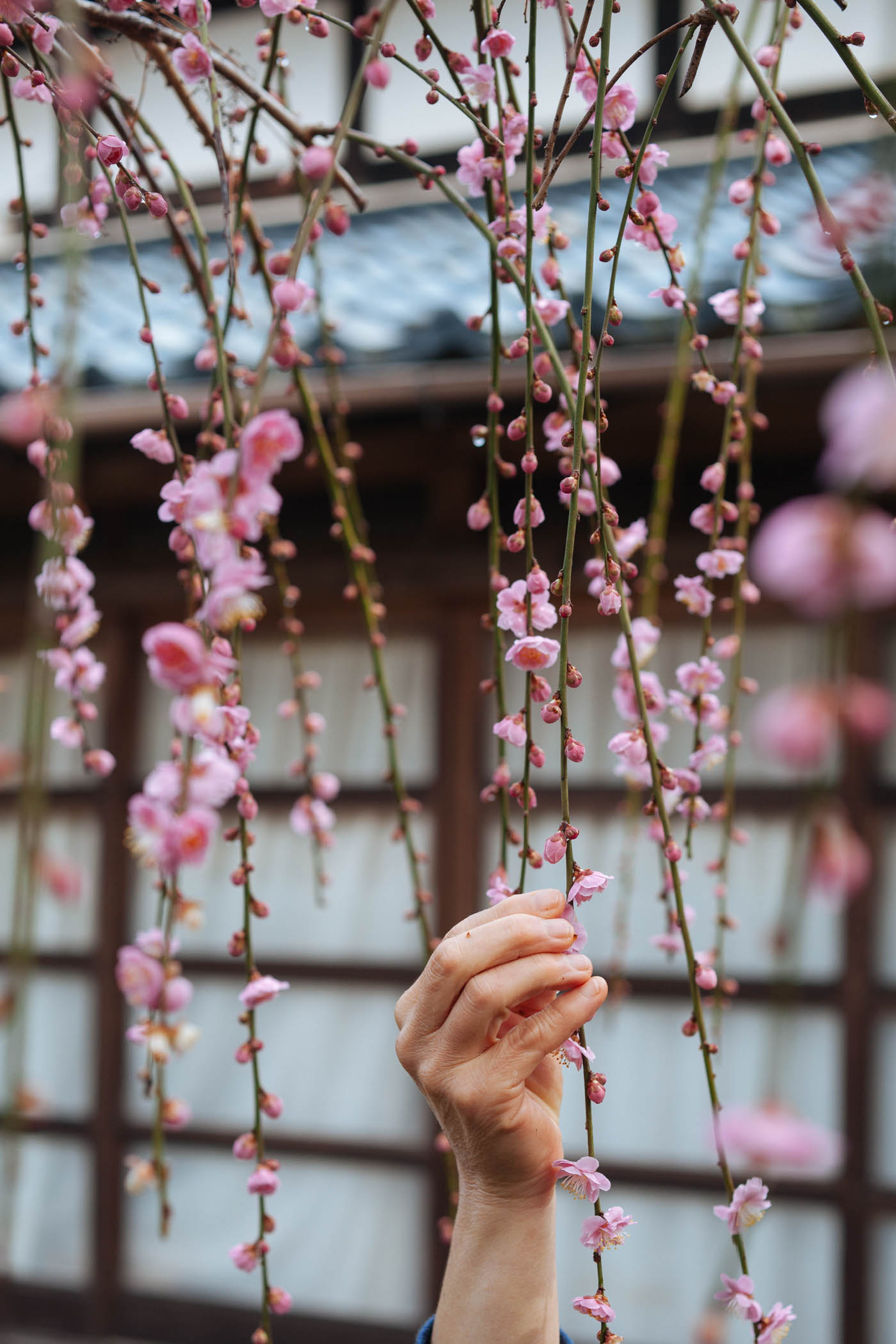
We descend from our hilltop, the narrow road winding through thickets of bamboo, past blooming ume and rows of mikan. Beside an old storehouse clad in sky-colored tin, we park, leap out, and tumble down a slippery path, careful of twisted roots and sinkholes. The world is still brown, barren. But beneath a canopy of withered bracken, a flare of green catches my eye. I draw back the ferns to find it: an emerald trumpet, quilted like brocade.
Fukinoto.
The first taste of spring.
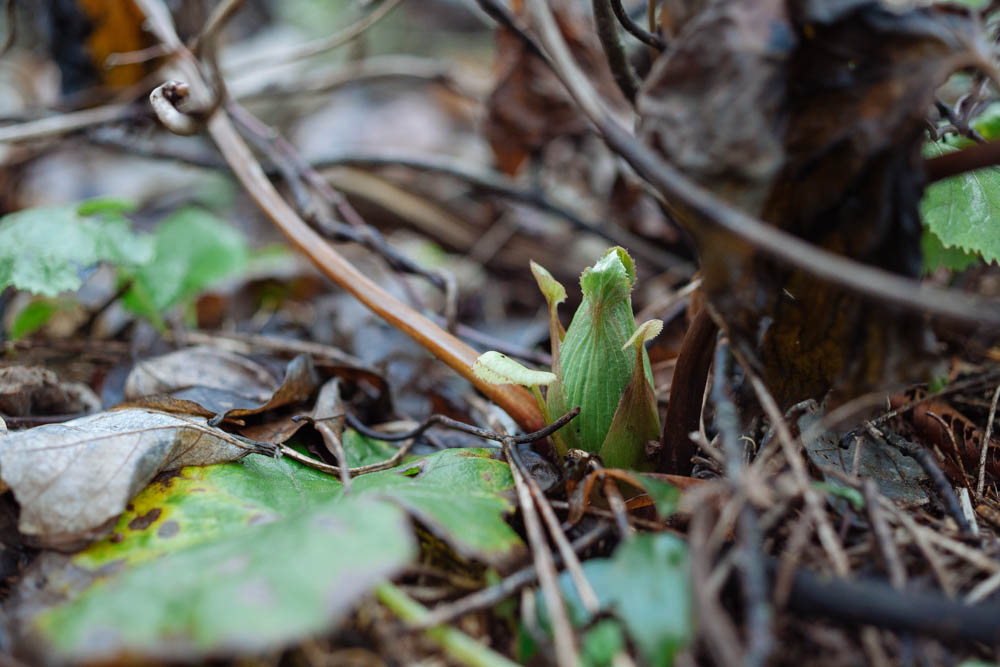
Fukinoto are the young buds of the butterbur plant, the earliest of Japan’s wild spring vegetables. They mark the first stirrings of a new season. In Japanese culinary culture, a single ingredient moves through three poetic stages: hashiri, the anticipation of the first arrival; shun, the peak of flavor and abundance; and nagori, the final, fading echo of the season. Each phase is cherished.
Hashiri carries a thrill. It is not about peak ripeness. It is about arrival. Longing fulfilled. Possibility unveiled. Fukinoto appear just as winter begins to loosen its grip, the only bright green in a pale and sleeping landscape. I kneel down, raise one to my nose, and breathe in the scent: wild, bitter, mineral, alive. The smell of the season’s turning.
There is a primal satisfaction in foraging. To find food in the wild stirs something ancient in the blood. It is the covenant of continuation. A whisper that we will eat, we will live, we will see another spring.
We only find a few handfuls. Most buds are still hidden, still dreaming beneath the soil. That’s as it should be. It is still cold. My fingers ache as I pry them loose. But this small harvest is enough.
Because we have crossed a threshold.
To cook and eat in Japan is to live attuned to nature’s shifts. The agrarian calendar divides the year not into four macro-seasons but into dozens of micro-seasons. Every few days the almanac turns, ushering in new ingredients, new moods, new invitations. Here in the countryside, far from the temples of haute cuisine where ingredients are cloaked in pomp and performance, we follow the almanac of light and soil. We taste what time offers.
Today is February fourth. Risshun. The first day of spring on Japan’s traditional calendar. The air carries the first breath of spring, though winter still lingers in the bones of the landscape. The earth is in that liminal state between sleeping and waking — remembering itself. Year after year, without realizing, I set out on this same day. The body remembers what the mind forgets. Risshun brings a quiet loosening inside, a silent message delivered: it’s time. And so we begin.
And so we begin.

The fukinoto of hashiri are small, tight, and intensely flavored. They carry the hardship of winter in their cells. Tempura is their perfect stage. Lightly battered, flash-fried. Crisp without, silken within. We eat them hot, with sea salt and lemon. Bitter. Lush. Electric. The flavor is an awakening.
Spring begins not with a date, but with a bite. A flicker of green against a brown hillside. A flavor so alive it startles the tongue.
This is fukinoto. This is hashiri. This is the first taste of becoming.