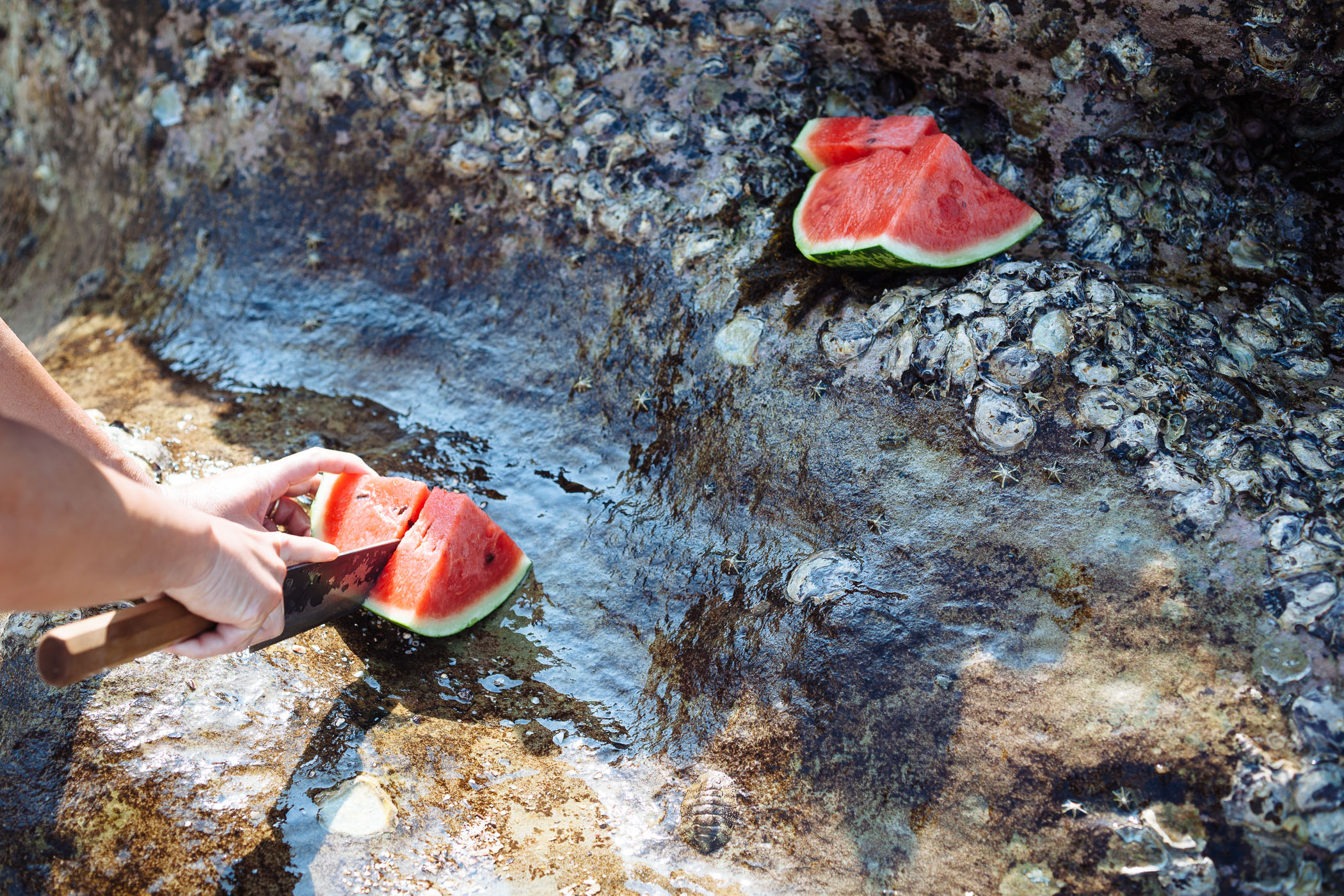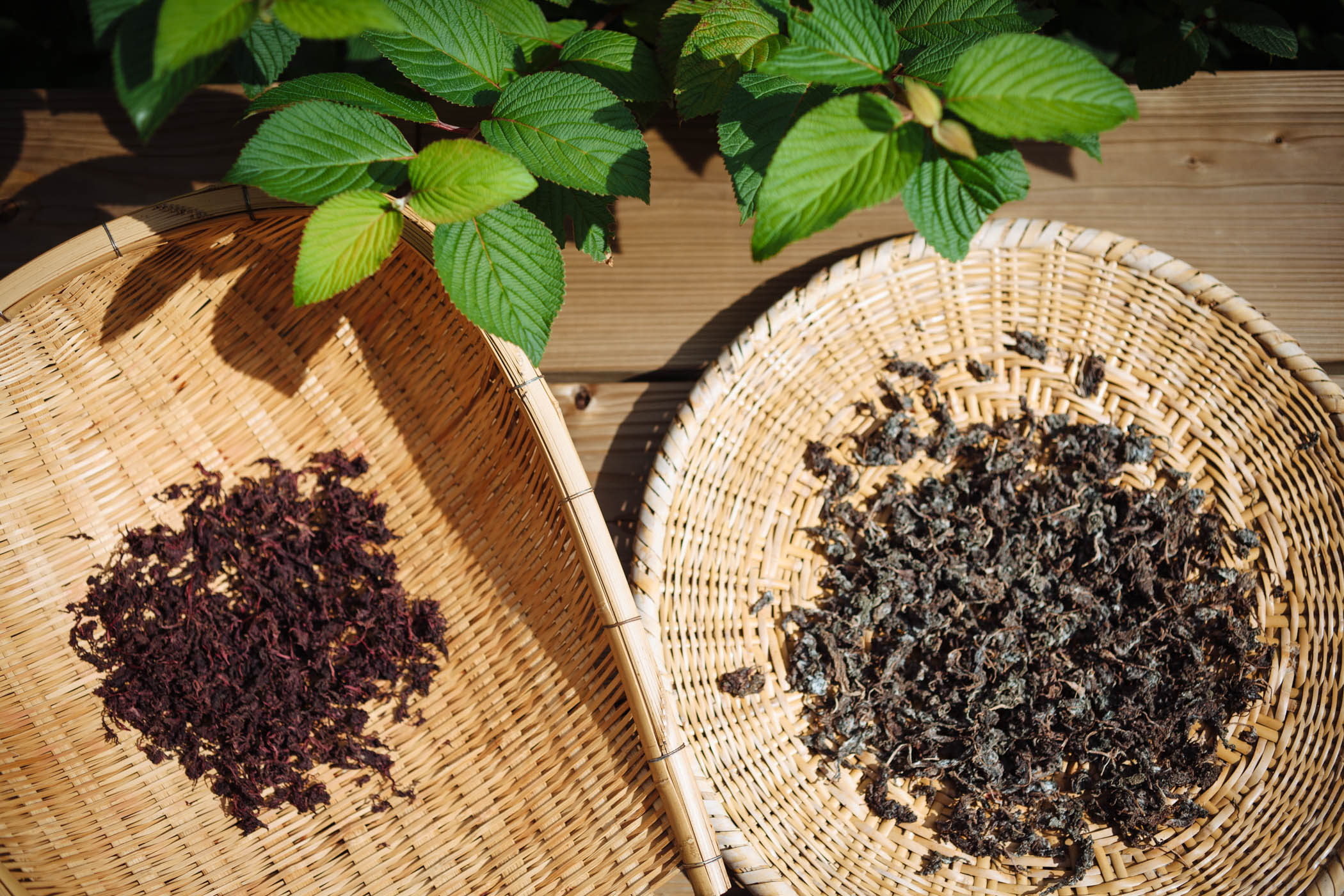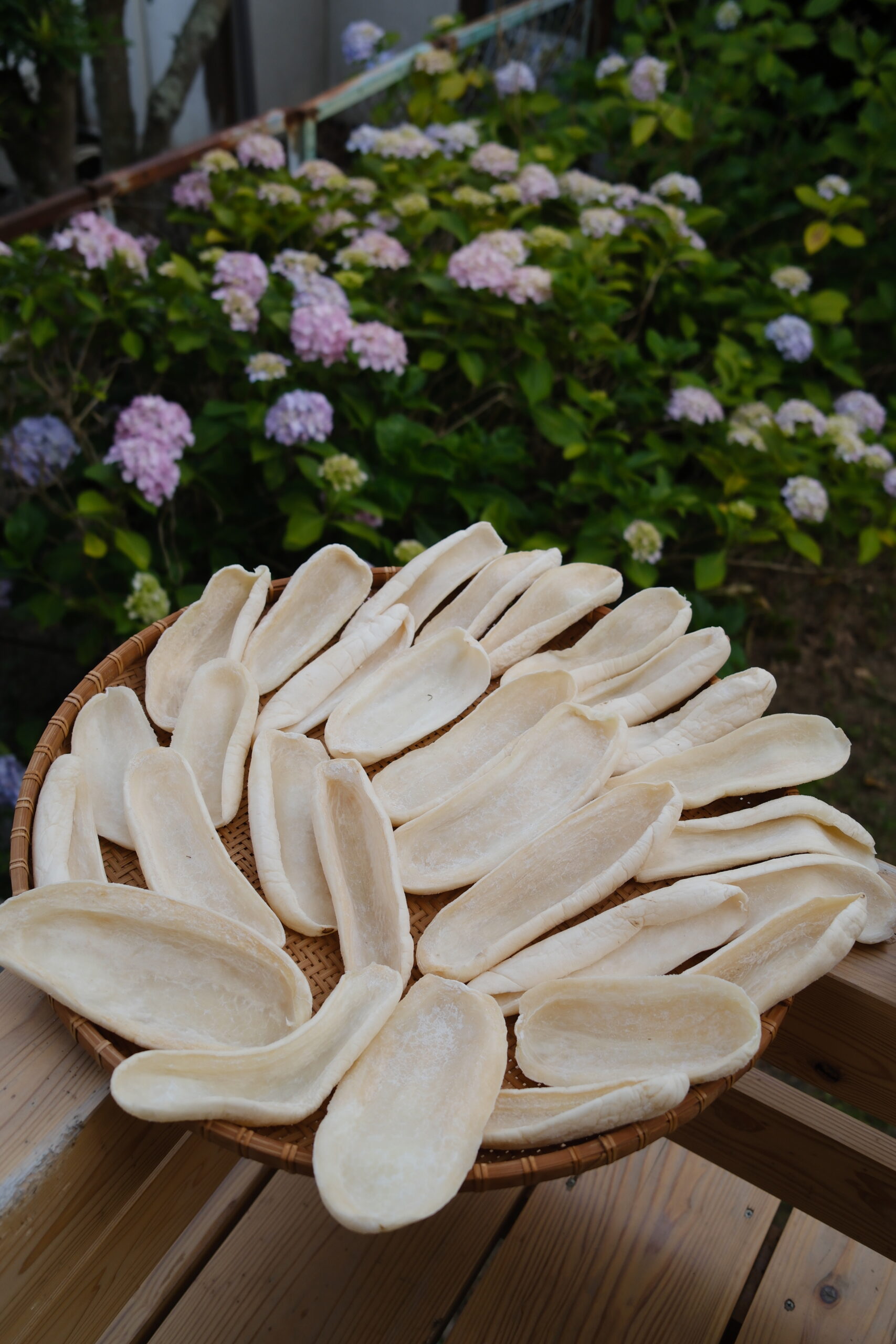
The first real kiss of summer heat grazes the skin, and with it come the season’s first melons.
Not the fragrant melons of high summer, whose sticky-sweet juices run down wrists and forearms as each slice is lifted to the mouth. These are uri, pale green, thin-skinned, crisp beneath the knife, their seed-filled centers somewhere between cucumber and melon.
They are not gathered for sweetness. They are gathered for preserving.

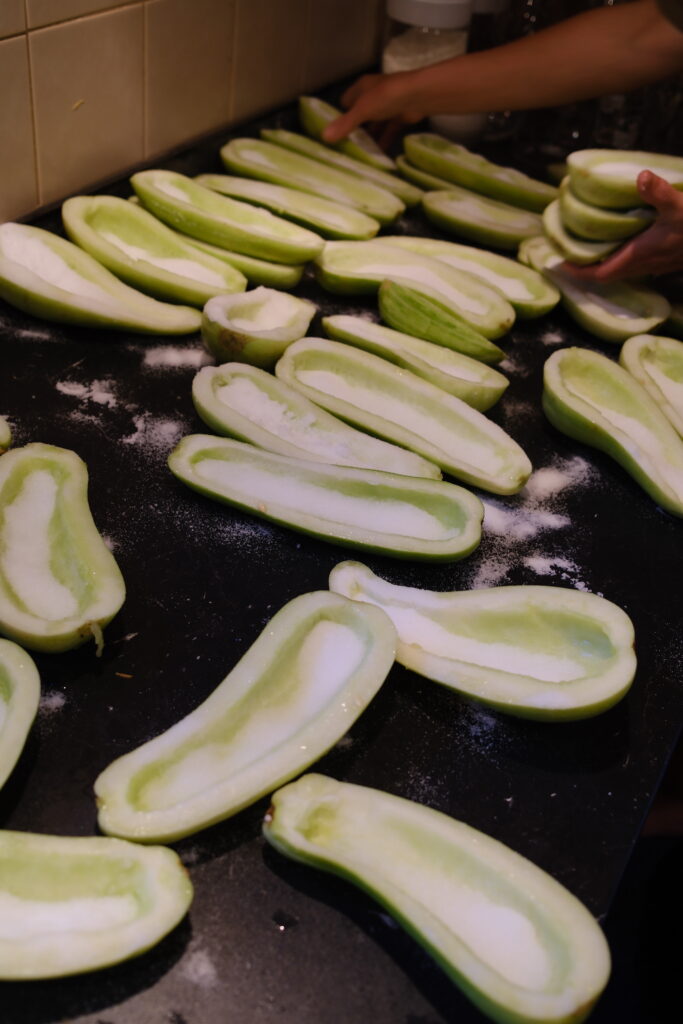
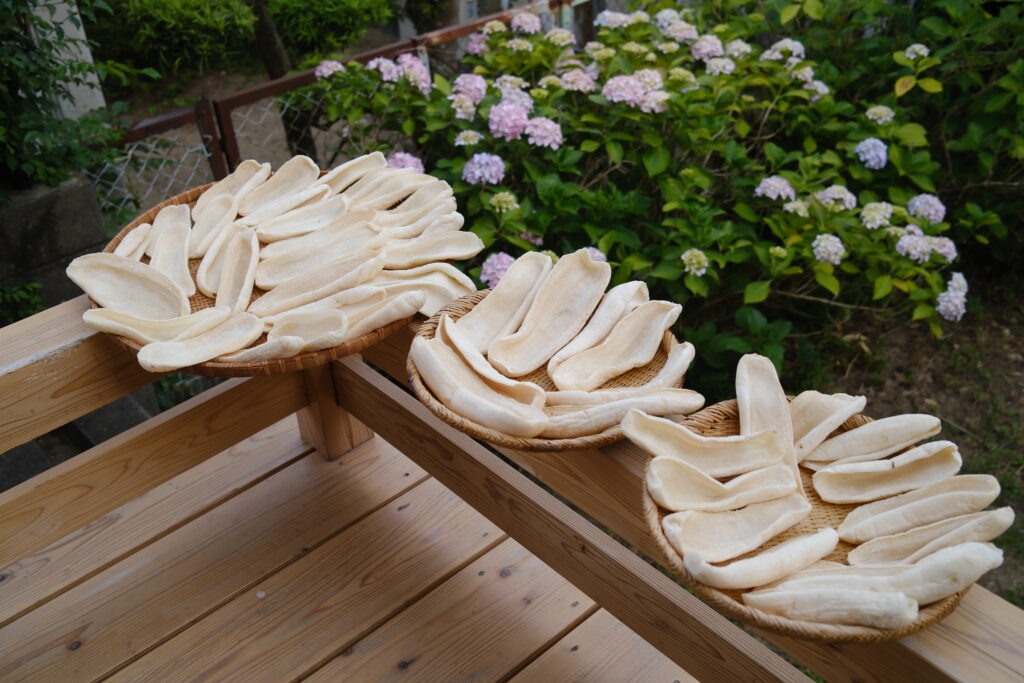
We stand in Mai’s kitchen. Against the backdrop of the longest days of the year, we wash them, halve them, scrape away their soft centers, and salt them generously before setting them aside. Already, they begin to surrender themselves. Tiny beads of moisture gather across their cut surfaces.
We leave them there.
At Mai’s house, a wall of glass opens toward Mount Kagami rising beyond the neighboring rooftops, its broad silhouette slowly dissolving into the blue of early evening. Hanako opens a bottle of umeshu older than she is, discovered at her ancestral home. The date is written in her mother’s hand. There were many bottles like this tucked away in Kuniko’s pantry. But none nearly as old as this one. Its age. Its size. Its unexpected appearance after so many years. A quiet reminder of a pantry no longer replenished.


We taste it straight. Then over ice. Then again cut with sparkling water. The same plum wine reveals itself differently each time, as though age had made it less fixed rather than more.
Mai cooks the way only those shaped by years in the kitchen can, generously, instinctively. One fiery Chinese dish follows another, each seeming to arrive without effort at all.
The heat of the spices and the early summer evening draw tiny beads of sweat across our foreheads. Back on the kitchen counter, the salted melons sweat too.
With smiles wider and bellies fuller, we clear the table and return to the kitchen. The work now is almost no work at all. The melon halves are packed tightly into a waiting bucket, layered with the salt that has already begun drawing out their juices. A weight is placed carefully on top.
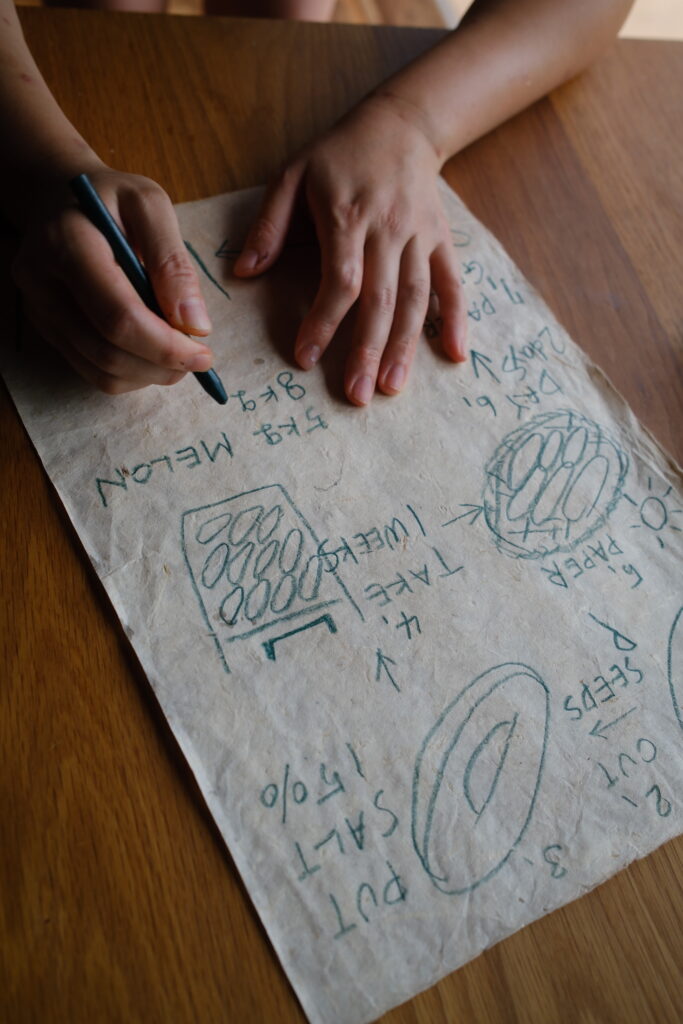
From here, time takes over. The melons will rest in their own brine until the season itself has moved forward, until we have crossed the threshold of the solstice and early summer begins yielding, almost imperceptibly, toward what comes next.
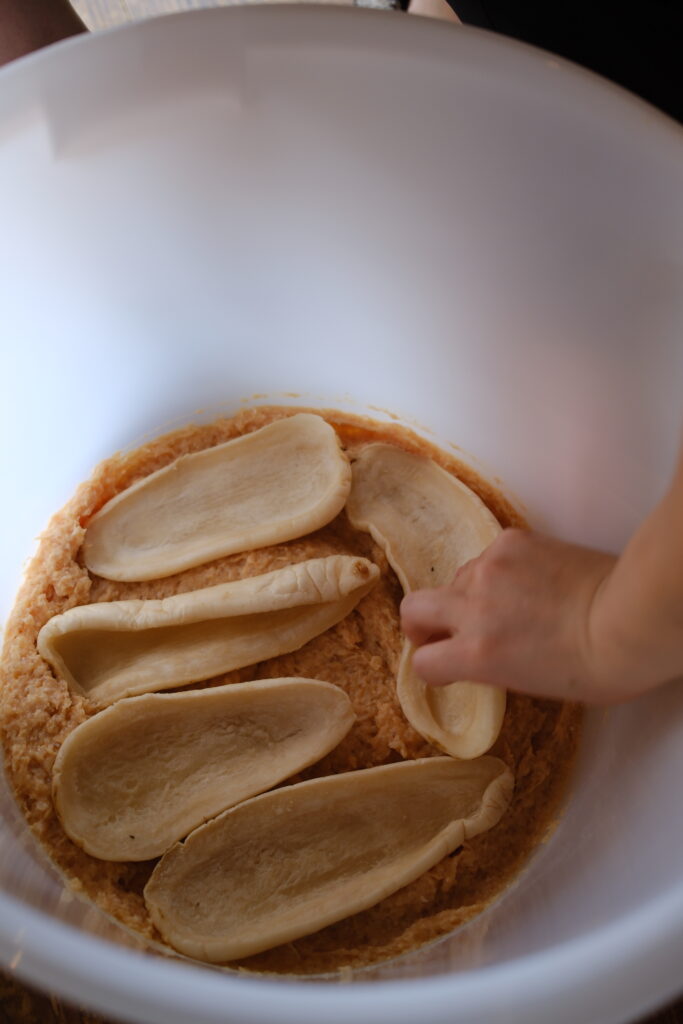
Most uri become narazuke, cured for months in sugar and deeply fermented sake lees. For years, I never cared for them. Narazuke occupied one small corner of the very short list of Japanese flavors I thought I would never learn to love.
Then I tasted Mai’s. Crunchy. Sour. Gently sweet. The unmistakable fragrance of fermented rice and koji unfolding slowly across the palate until something that once felt excessive suddenly became complete.
Sometimes it is not the flavor that changes. Only the person tasting it.


Narazuke is profoundly Japanese.
Summer’s first fleshy fruit entrusted to the lees left behind from winter’s noble drink. Nothing wasted. One season quietly preserving another. Rice becoming sake. Sake becoming kasu. Kasu becoming pickle. Time folding gently back upon itself.
Season. Grace. Economy. An entire philosophy of living held inside a humble pickle.