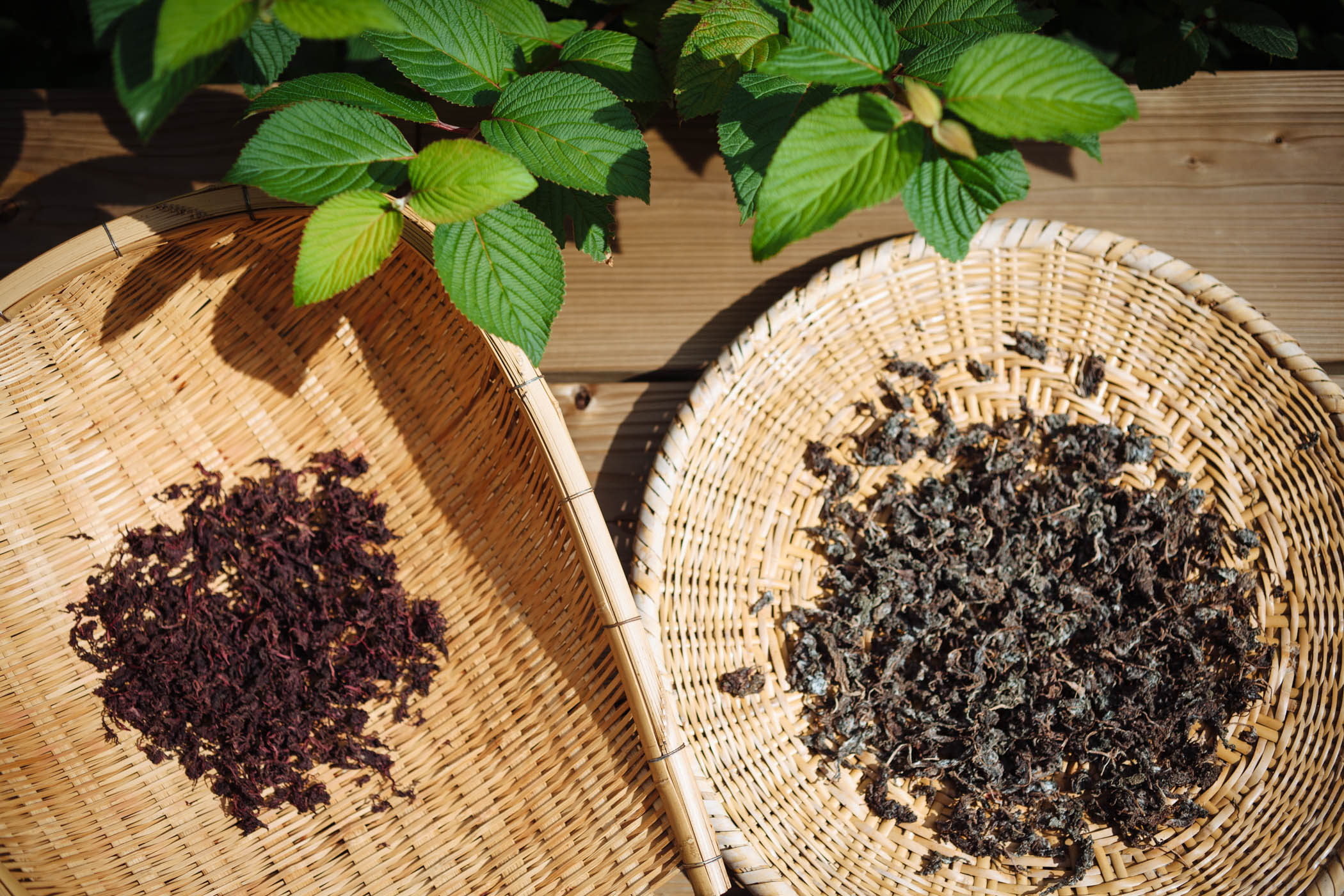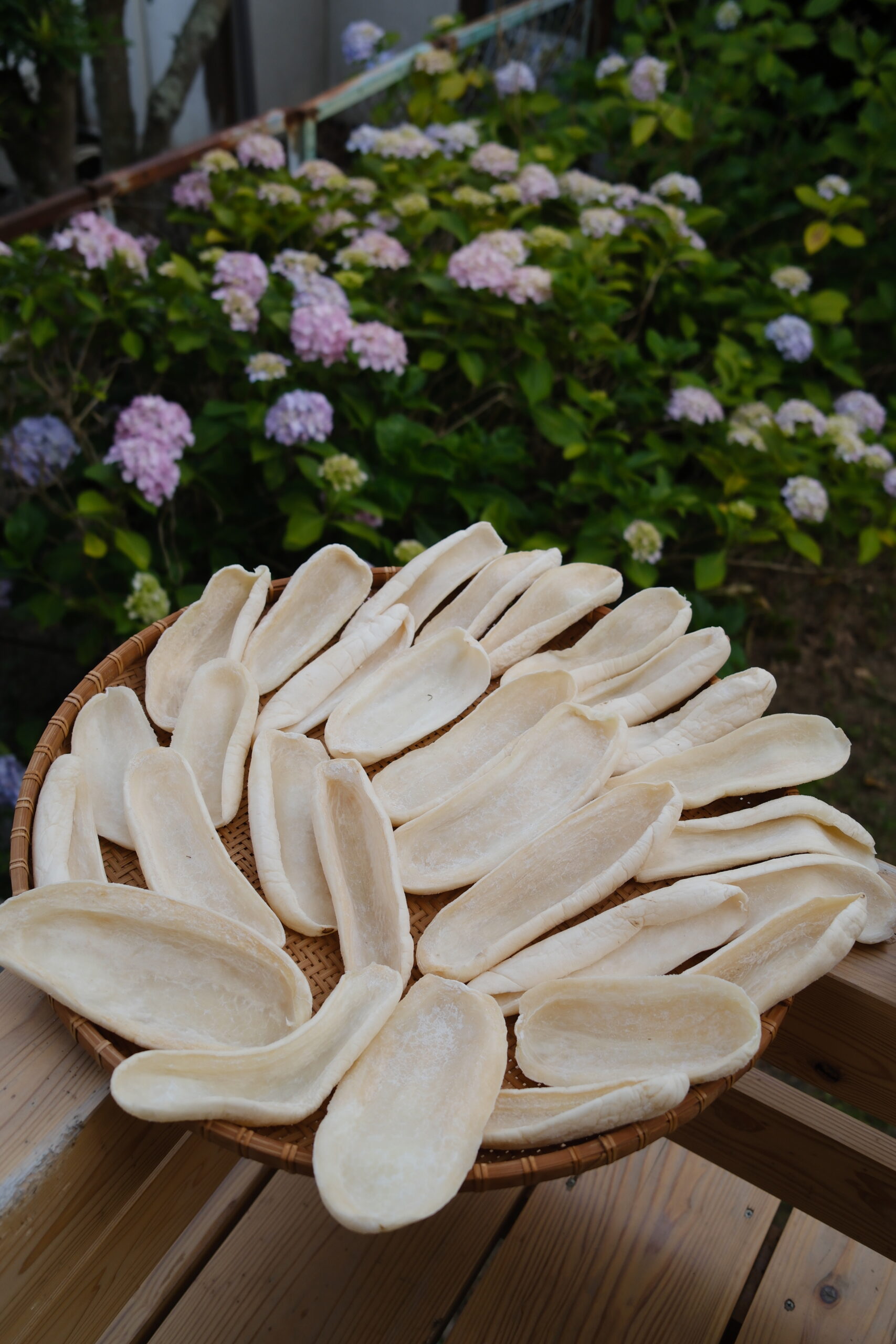
Jellyfish chase us from the sea. Those tepid, salt-heavy waves beneath a weightless August sky now belong to translucent bells trailing invisible threads of fire.
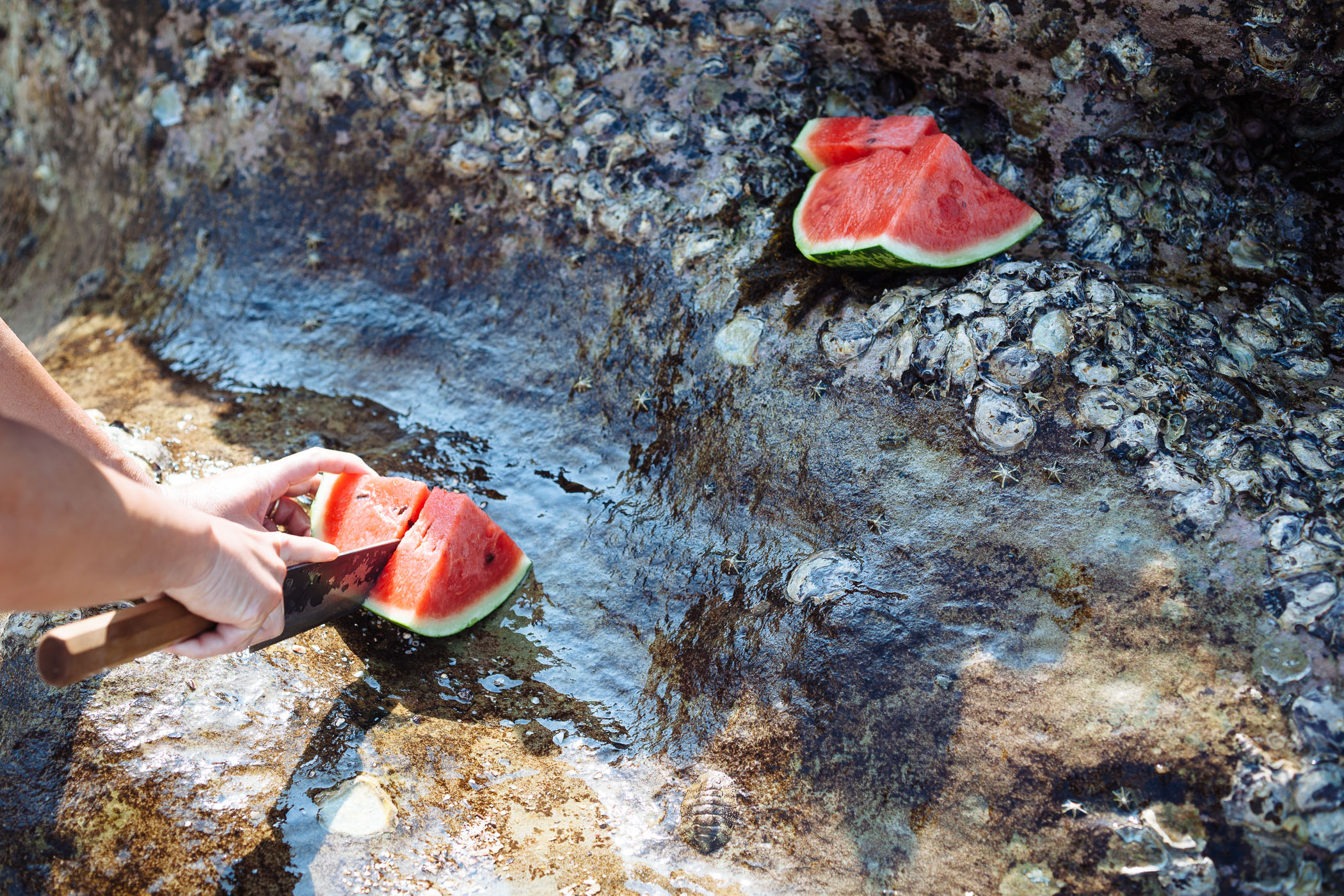
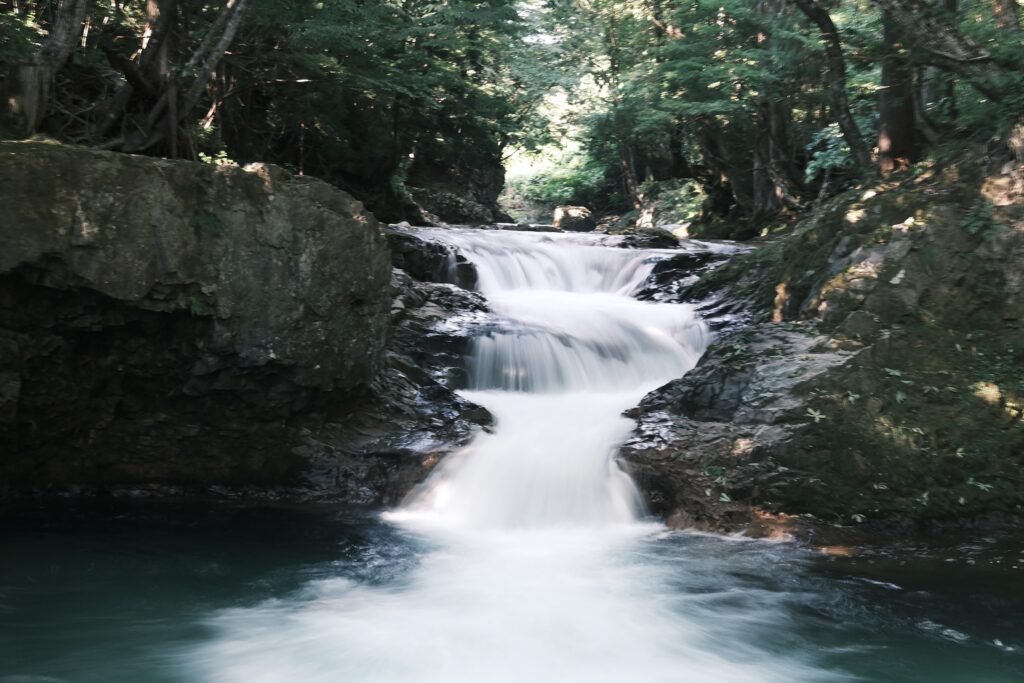
We take our overheated bodies to the mountain streams instead. There, the water runs icy cold and clear, gathering in deep pools beneath smooth granite boulders before hurrying on again. The cold steals the breath before returning it.
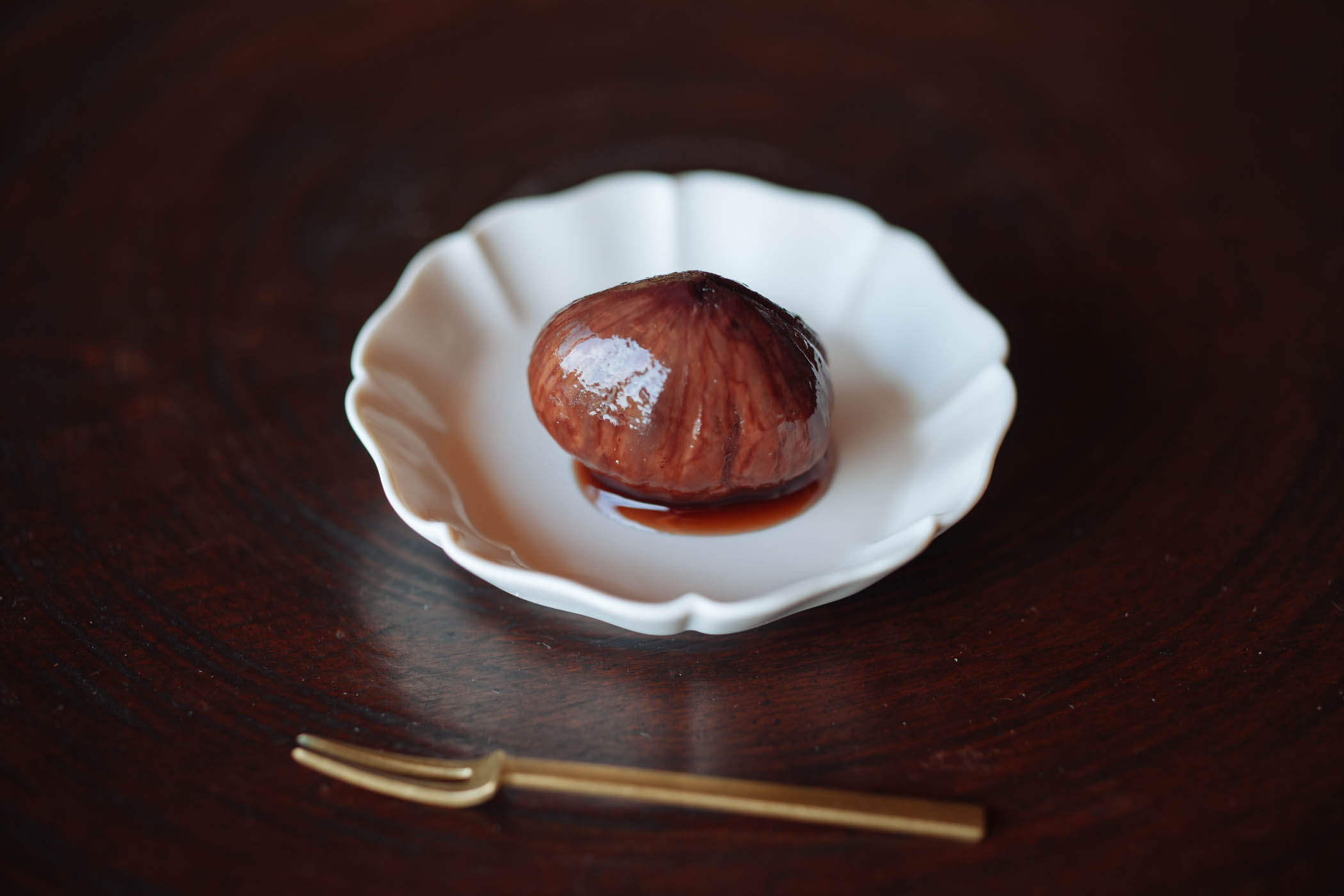
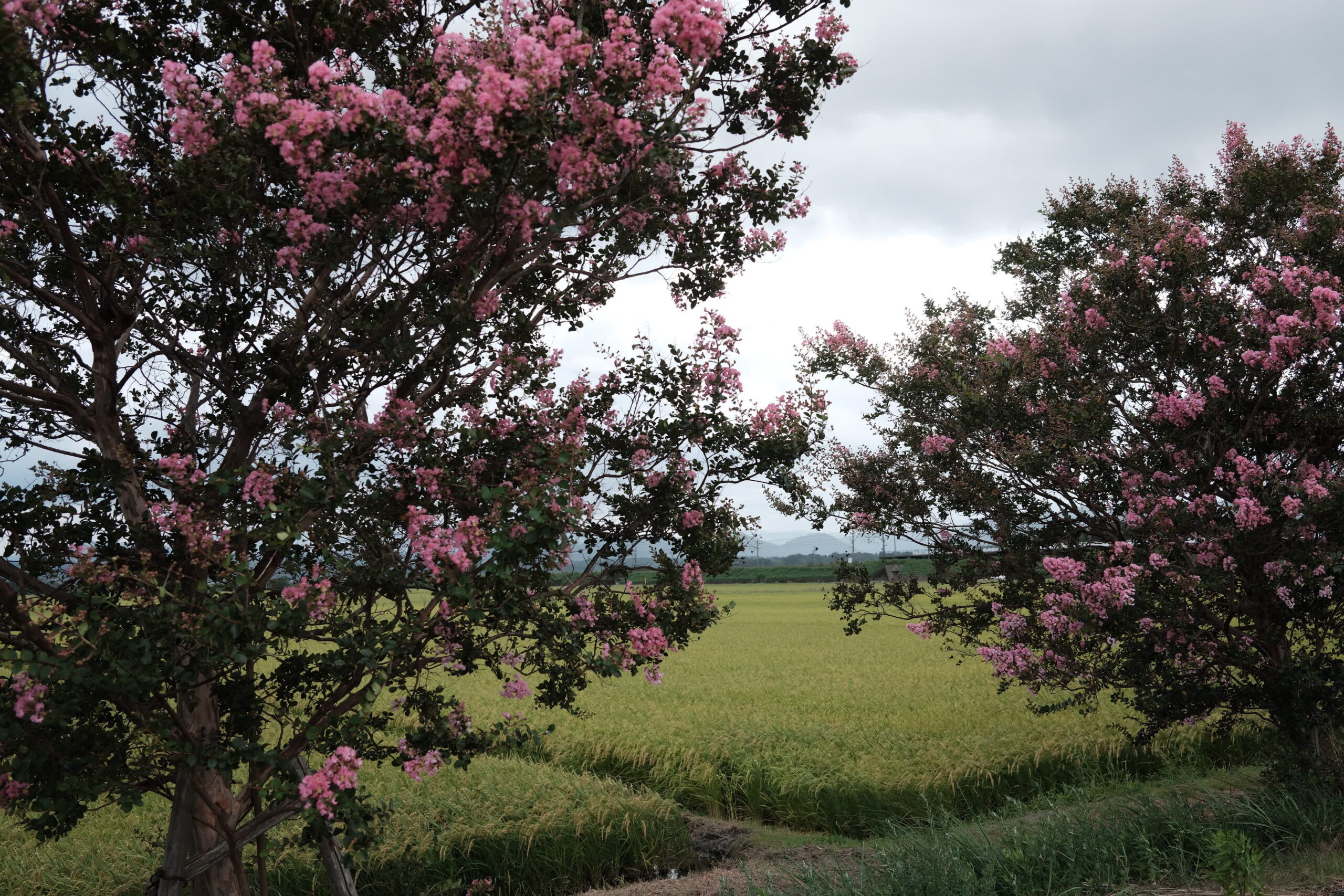
In the countryside, the landscape is always looking ahead. Green chestnuts dot the roadside, fallen before their time. Small promises that autumn is already ripening in the branches above. Vines spill over canopies.
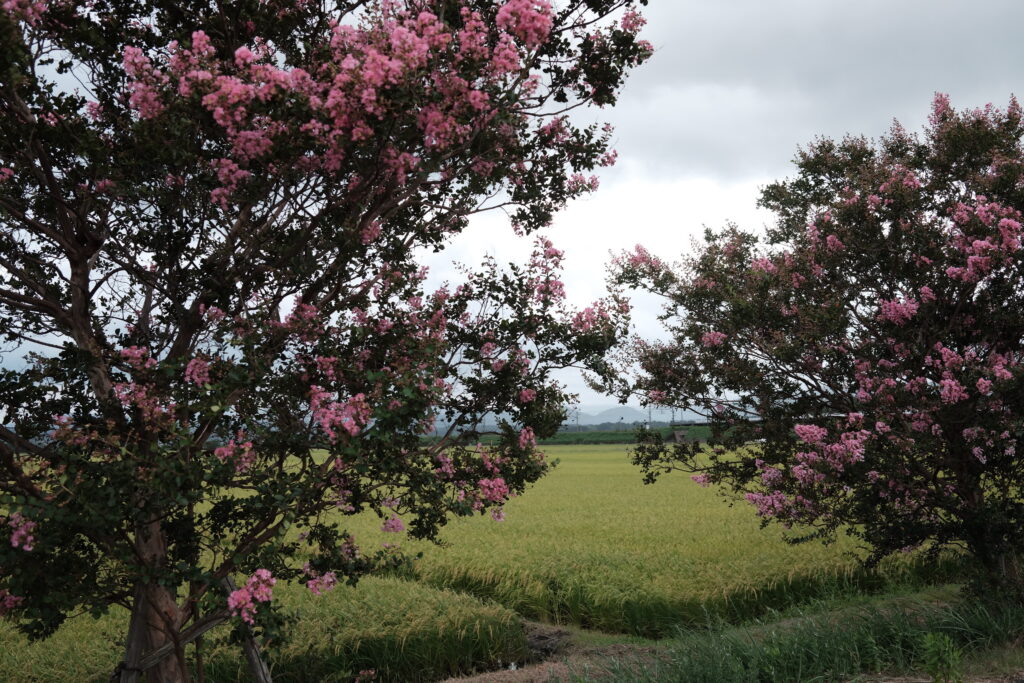
Terraced fields are thick with rice, the first heavy panicles beginning to bow. The harvest is already written there. Soon these fields will exchange the vivid green of midsummer for the softer hues that will ripple across the valleys.
Living with Japan’s seasonal calendar, I began to notice how many different ways a year can be measured. Not only by months, but by flowers, harvests, festivals, and the cyclical labors of the land. The eighty-eighth day after the beginning of spring marks the first tea harvest. The two-hundred-and-tenth day has long warned farmers to watch the skies, when typhoons threaten the ripening rice. A culture teaches us where to look.
These dates don’t exist apart from the land. They point back toward tea fields, rice paddies, rivers, mountains, persimmons, chestnuts, storms, and the moon. The micro-seasonal calendar doesn’t pull us away from nature. It returns us to it. In the countryside, the fields root us in time and place. The hills a kind of almanac. Every bend in the road another page already turning toward autumn.
The mountain stream is still icy against the skin. Summer lingers in the air. Yet from these winding roads, autumn is already visible. On the horizon.