By early August, the heat has settled into everything. Cicadas are frantic with summer, calling from first light until evening, their cry pressing against the house from every direction.
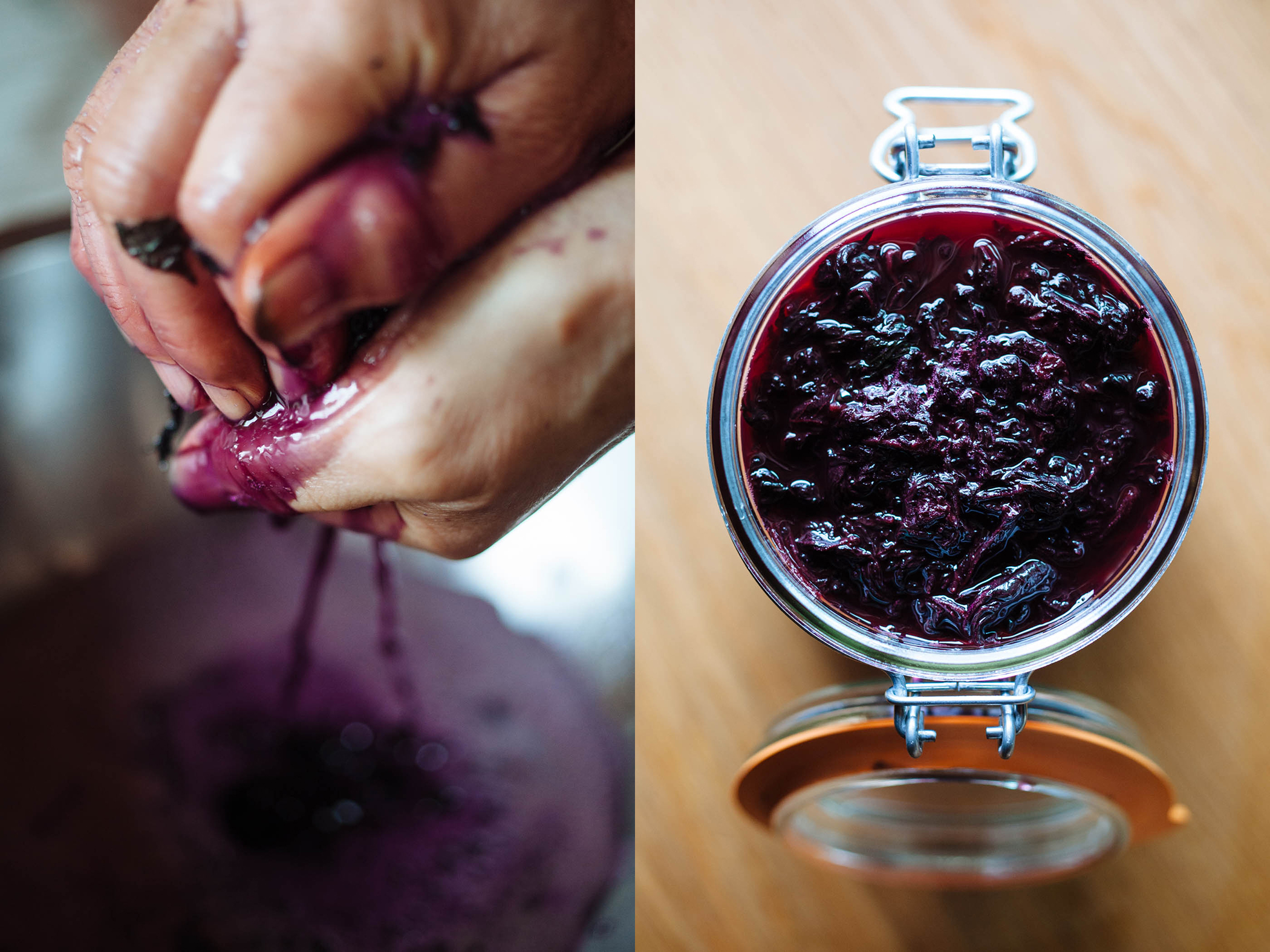
The ume rest in jars, their days beneath the fierce doyo sun complete. Other jars languish nearly empty but for a nest of dark umejiso, folds of red shiso from batches of umeboshi long consumed.
Summers ago, the leaves entered the bucket brilliant purple. They gave themselves to the fruit. Now, long after the last umeboshi has been eaten, they remain, their sharp herbal character threaded through with plum and salt.
The ume are gone. The shiso is still becoming.


Soft, almost lush with brine, the leaves are chopped finely and folded into a pot of freshly steamed rice, flecks of shiso punctuating the white grains. The warmth releases its fragrance, sour plum, spicy herbs, mineral salt. Pressed into onigiri, the rice becomes flecked purple-black, each bite bright enough to sharpen an appetite dulled by the heat.
The rest returns to the sun.
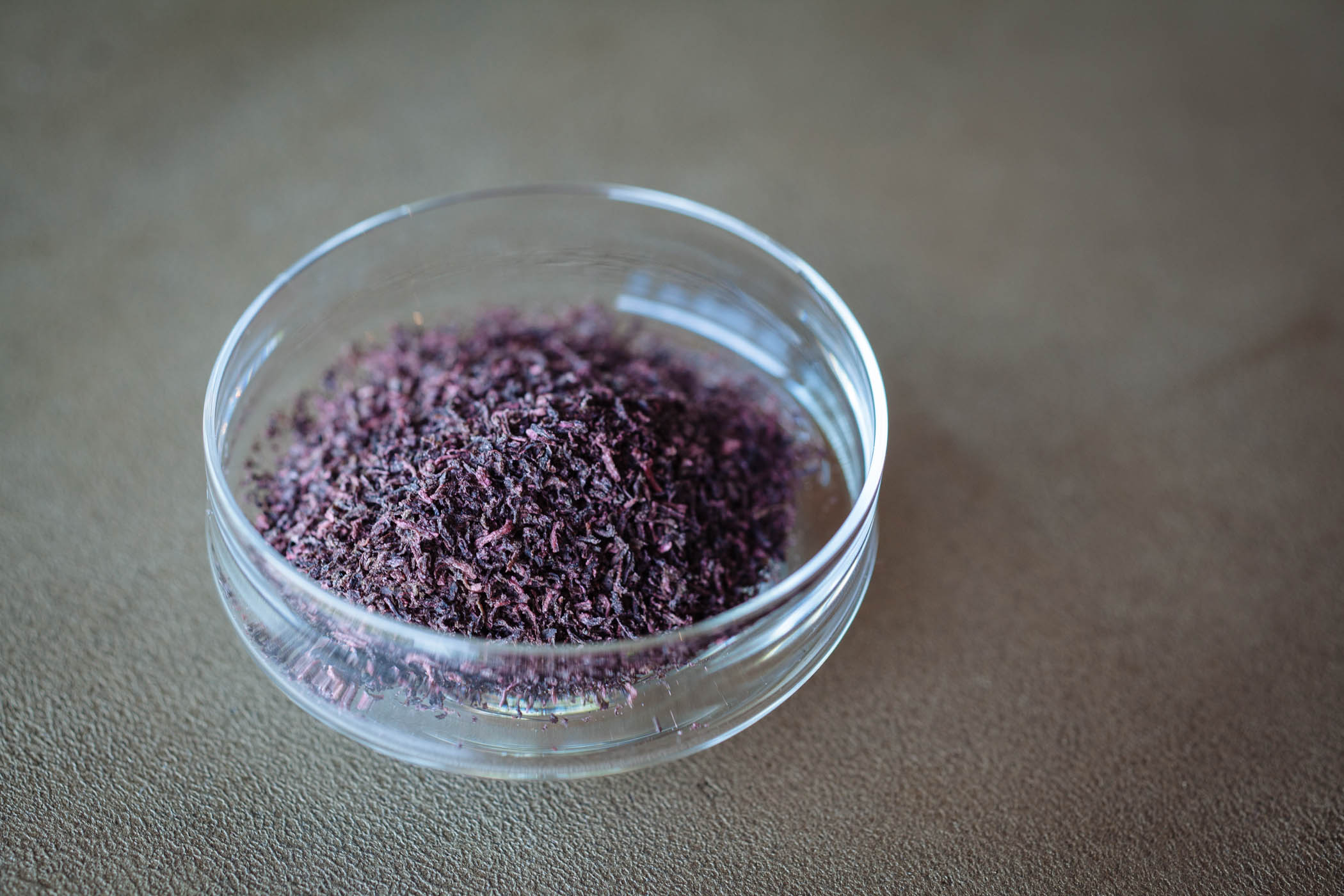
The leaves separate reluctantly, still clinging lightly to one another after years beneath the brine. I loosen the tangled leaves and spread them across bamboo trays, their dark folds glistening briefly before the heat begins drawing out what remains. Even now, the leaves stain the fingertips, still carrying the moisture of the summer that made them. By afternoon, the supple leaves have tightened. Another day beneath the summer sky and they become dry enough to crackle between fingertips, their fragrance concentrating as their moisture disappears. The pestle breaks them into crimson flakes. Then smaller fragments. Finally, a fine tart powder.
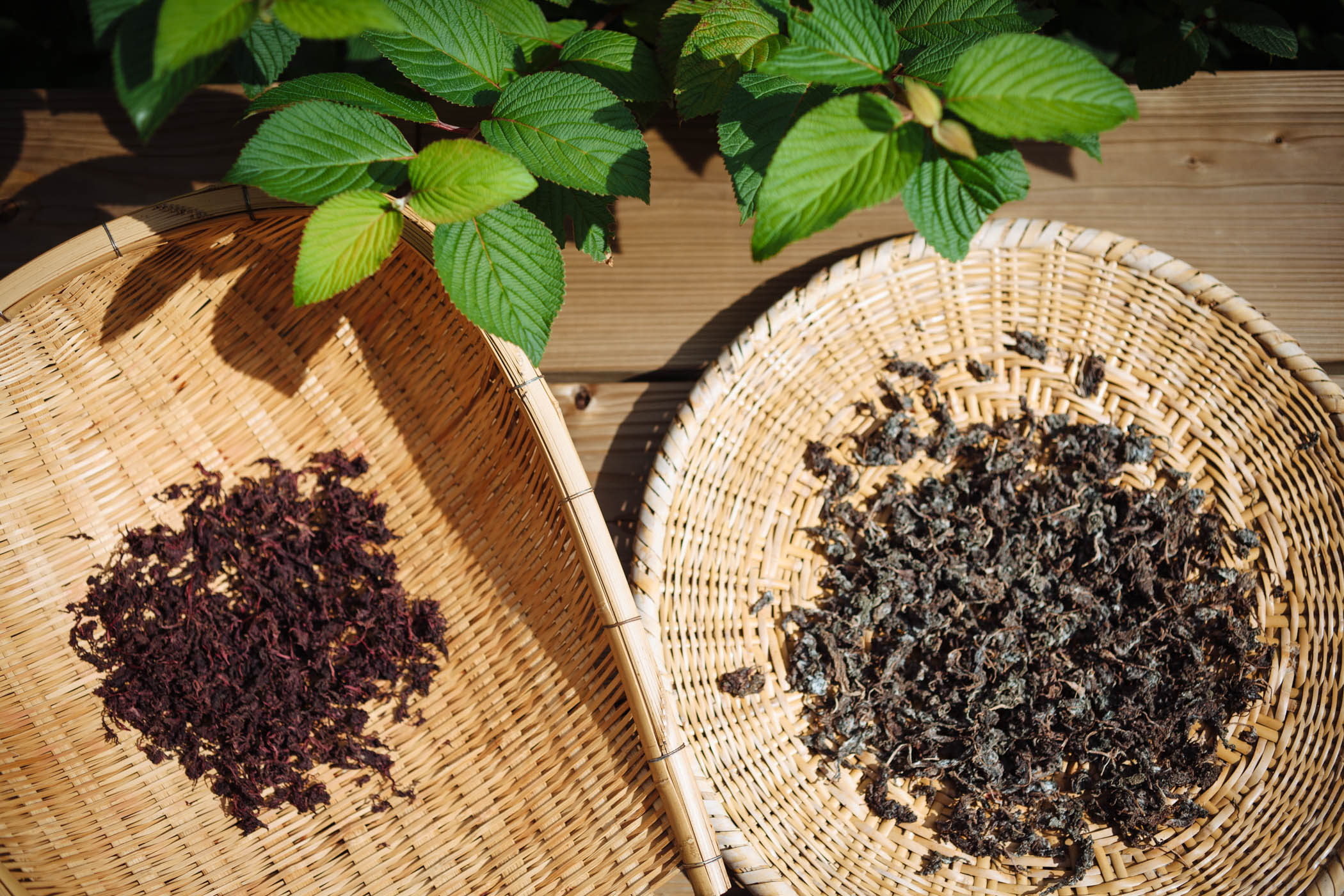
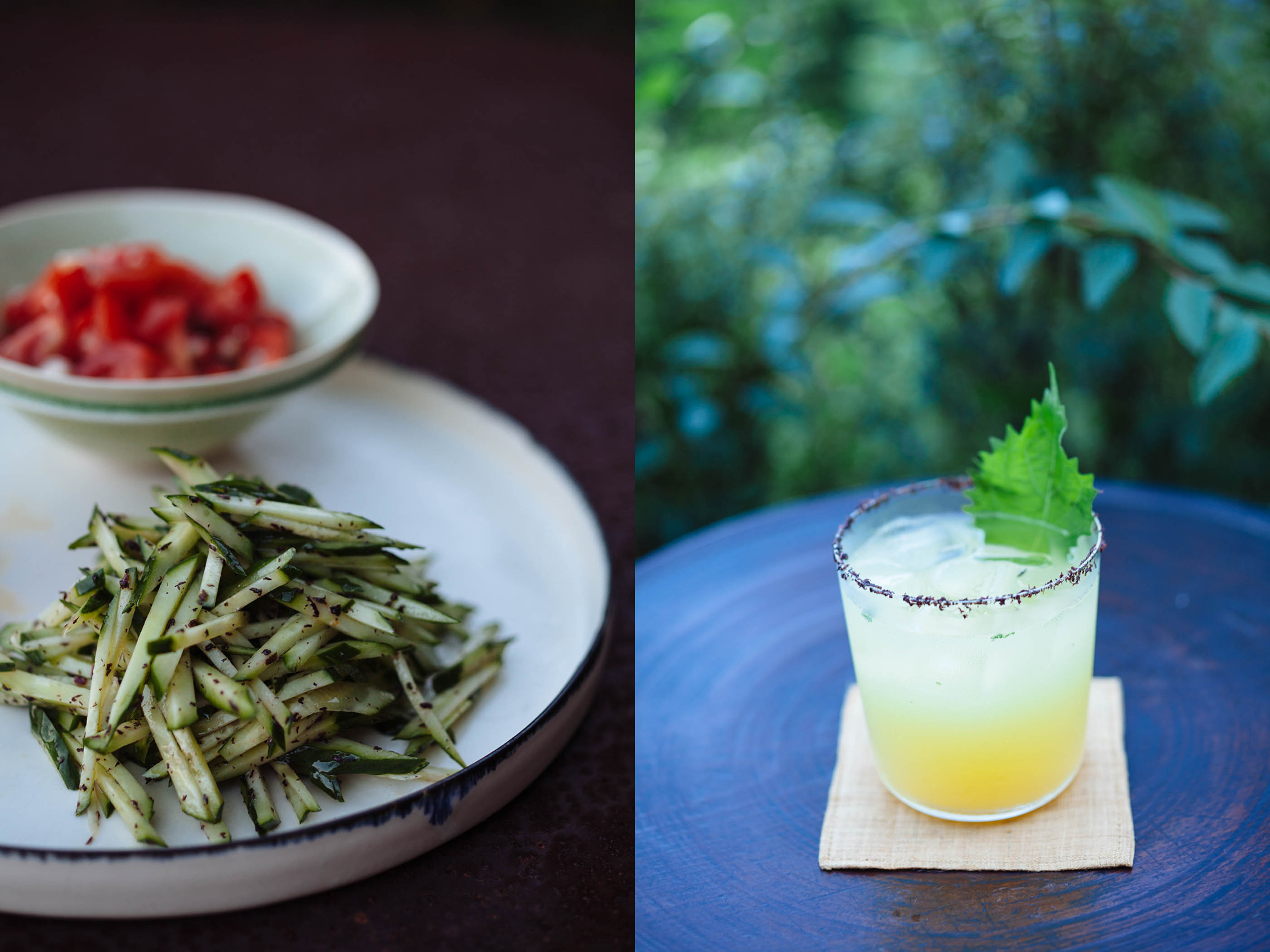
Yukari. Salty, herbaceous, intensely sour, carrying the concentrated brightness of ume. It catches along the ridges of sliced cucumbers, clings to tomatoes still warm from the garden, rims the occasional summer cocktail. A pinch is enough to draw a whole season across the tongue.
Nothing in the kitchen ends where it first appears to. Red shiso begins in the summer garden. It gives itself to the ume. Years later, it still finds new forms. Soft beside warm rice. Dry beneath the summer sun. Finally, yukari. Nothing wasted. Nothing hurried toward an ending. One form held inside another.